Selling electronics sounds profitable until price competition starts killing your margins. If you’re looking for profitable electronics to sell, the problem isn’t demand. It’s choosing the wrong type of product. A device can sell hundreds of units and still make almost no profit — simply because it’s too easy to compare, too widely available, or constantly undercut online. In 2026, winning isn’t about chasing trends. It’s about choosing products that protect your margins and actually scale.
This guide breaks down which categories truly make money and how they perform in the real world so you can think like a retailer, not a trend follower.
What Actually Makes Electronics Profitable
Before jumping into a list of profitable electronics to sell, you need to shift your mindset.
Most sellers think:
“If it sells well, it must be profitable.”
In reality: The easier a product sells, the faster it becomes unprofitable.
- Controlled Competition (Not Just Demand): According to data from Statista, consumer electronics is one of the most price-competitive industries globally, with online price transparency at an all-time high. If your product is widely available on Amazon, your margin is already under pressure.
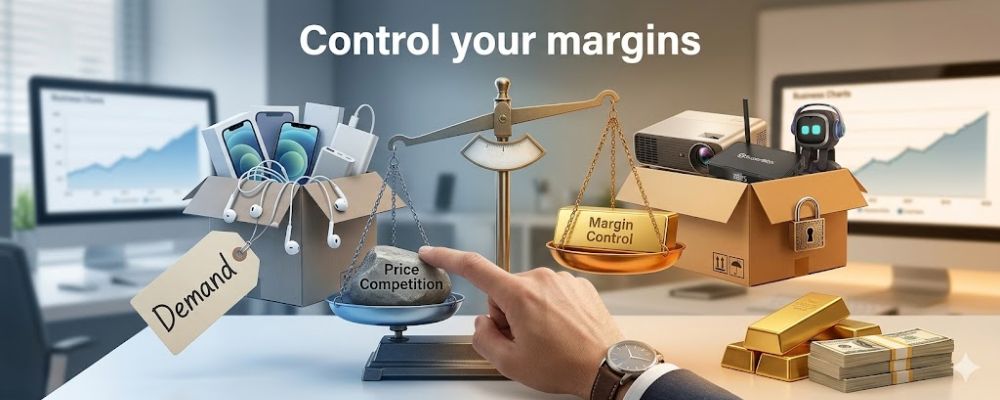
- Low Price Transparency: If customers can easily compare prices → you compete on price. If they can’t → you compete on value. Products that are difficult to compare across platforms allow you to:
- Maintain pricing
- Avoid direct competition
- Sell based on value, not price
- High Perceived Daily Value: Products tied to daily habits (TV, home, convenience) consistently outperform novelty gadgets. A report by Deloitte highlights that consumers prioritize daily utility and long-term value over one-time novelty purchases.
- Margin Protection Mechanisms: This is where most retailers lose money. Without pricing control, even the most profitable electronics to sell quickly become:
- Commoditized
- Undercut
- Unscalable
Quick Comparison: Which Electronics Actually Make Money?
Not all electronics are equally profitable even if they sell well. The table below breaks down which categories actually generate strong margins versus those that only bring volume.
Category | Margin | Competition | Difficulty | Best Channel | Time to Profit |
Streaming Devices | High (30–50%) | Medium | Easy–Medium | Online + Local | Fast |
Niche Entertainment | Medium–High | Low | Medium | Online | Medium |
Bundles | Very High (40–70%) | Low | Medium | Local + Online | Fast |
Smart Home (Niche) | Medium | Low | Medium | Online | Medium |
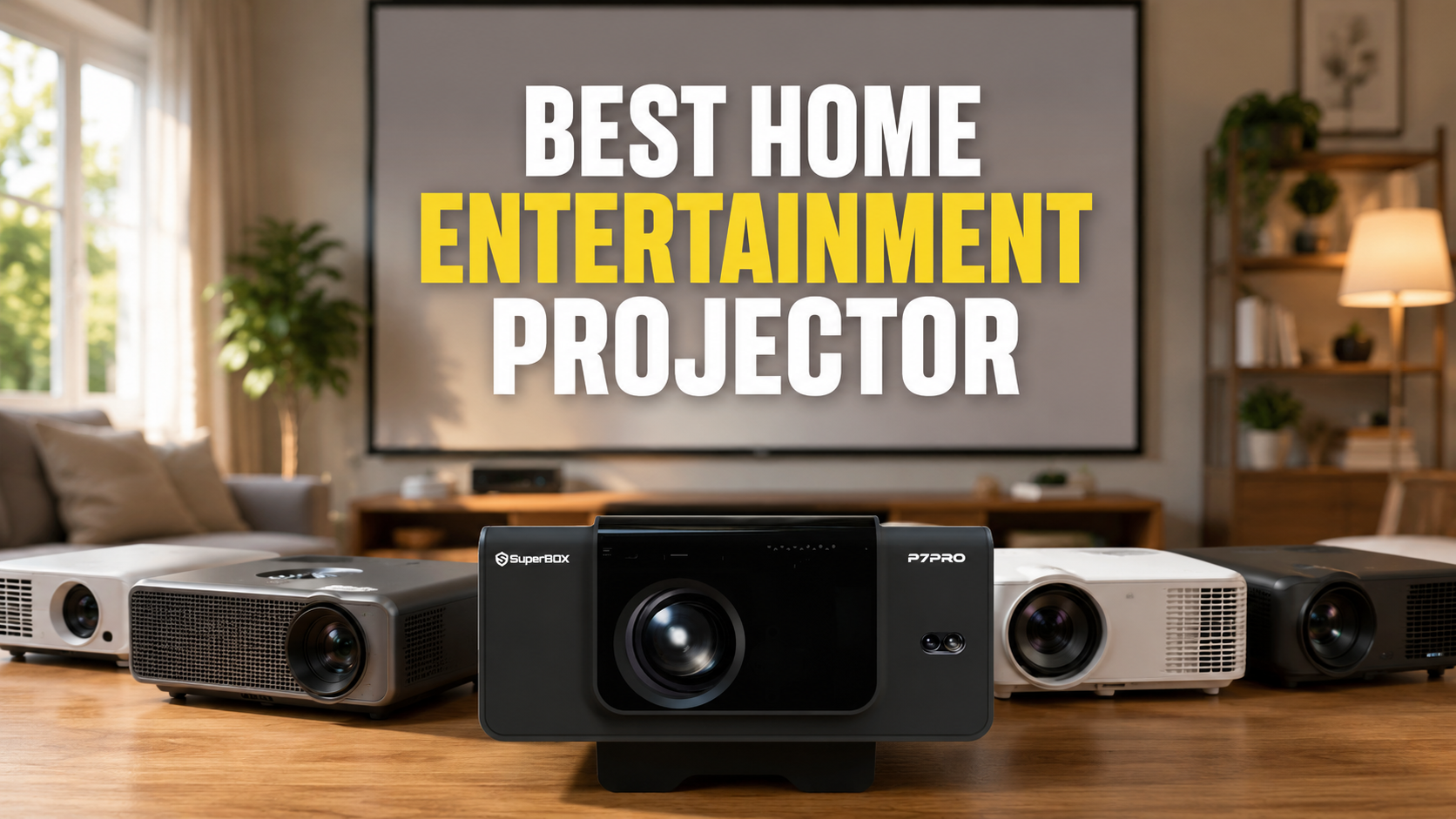
Projectors / Home Theater | Medium | Medium | Hard | TikTok + Local | Slow–Medium |
The pattern is clear: high-margin categories are usually tied to specific use cases, not mass-market appeal. If your goal is profit, focusing on value-driven products and bundles will consistently outperform generic electronics.
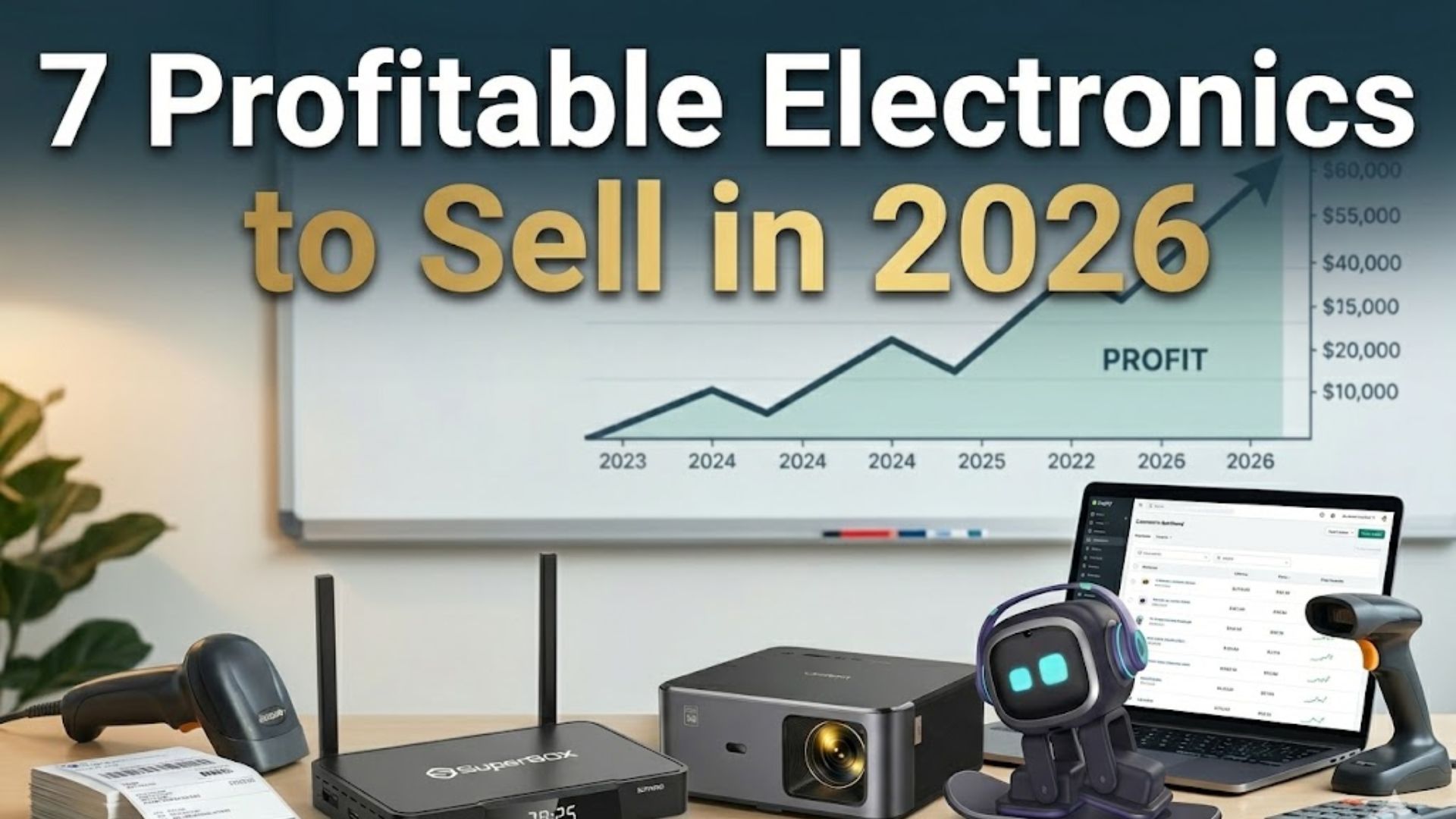
7 Profitable Electronics to Sell in 2026
These aren’t just trending products. They are strategically chosen profitable electronics to sell based on margin behavior, real demand, and scalability.
Premium Streaming Devices (High Margin + Fast Conversion)
This is currently one of the most profitable electronics to sell, and one of the few categories still in a growth phase rather than saturation.
Why demand is rising (real market behavior)
Consumers are actively looking for alternatives to ongoing subscription costs. According to Nielsen, the U.S. has over 120 million TV households, while reports from Deloitte highlight increasing “subscription fatigue” as users juggle multiple services like Netflix and Hulu.
At the same time, industry data from Statista shows that streaming consumption continues to grow, but users are becoming more cost-conscious, creating demand for one-time-value entertainment solutions.
Why products like SuperBox are gaining traction
Premium streaming devices sit in a unique position:
- High perceived value (daily-use entertainment)
- Simple setup (plug & play)
- Strong appeal for families and older users
- Word-of-mouth driven (especially in local retail)
Most importantly
- Demand is growing, but competition is still fragmented
- Not yet fully dominated by marketplaces like Amazon
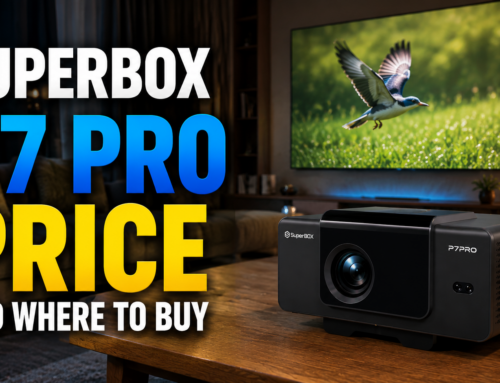
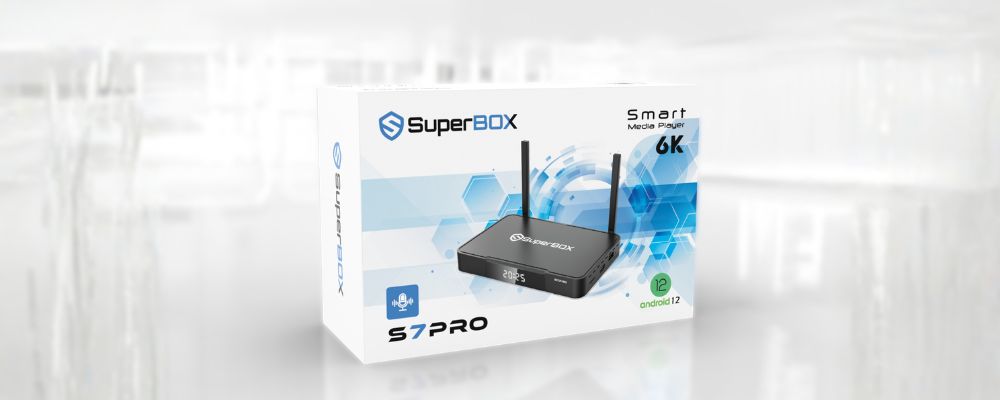
If you’re looking for a premium option in this category, the SuperBox S7 Pro stands out with its high storage capacity, smooth performance, and user-friendly setup.
Real numbers (typical)
- Cost: $1xx- $2xx
- Retail: $300–$400
- Margin: ~30–50%
Why it scales (real advantage)
- Offline: Easy to demo → high conversion
- Online (TikTok / YouTube): Visual product → strong curiosity + conversion
This dual-channel advantage is rare and makes it one of the most scalable categories today.
The real advantage (margin protection)
SuperBox operates with a structured pricing policy designed to protect its reseller network:
- Clear pricing guidelines to prevent undercutting
- Active monitoring of reseller pricing across channels
- Penalties applied to sellers who engage in price dumping
Result: resellers benefit from a more controlled market environment, where margins are protected and long-term profitability is easier to maintain.
What to watch out for
- Requires basic customer education
- After-sales support can be higher than average
- Positioning matters (wrong messaging reduces trust)
For a deeper breakdown of performance, usability, and real user experience, this detailed SuperBox review provides a more complete picture before making a decision.
Portable Projectors (Content-Driven Sales)
Example: Anker Nebula Cosmos Laser 4K

Real numbers:
- Cost: $500–$900
- Retail: $800–$1500
- Margin: ~20–40%
Why they work:
Market insights from Statista show strong growth in home entertainment hardware, especially portable and lifestyle-oriented devices.
- Highly visual → perfect for TikTok
- Strong lifestyle appeal (outdoor, travel, home cinema)
Reality check:
- Slower buying decisions
- Requires strong content to convert
Works best for sellers who can create video content.
Bundled Entertainment & Accessory Kits (Highest ROI Strategy)
This is not just a product category, it’s a margin strategy.
Example bundle
- Streaming device + keyboard + remote
- TV box + external storage + setup service
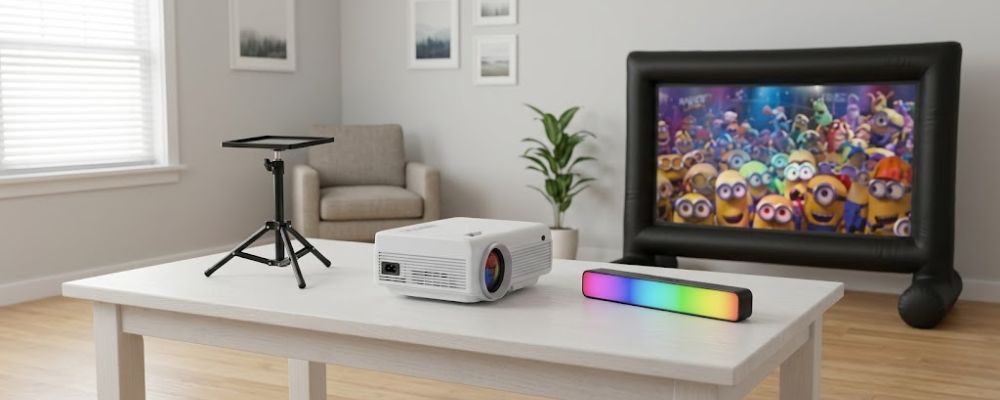
- Projector + screen + speaker
Real numbers
- Individual margin: 20–30%
- Bundle margin: 40–70%
Why bundling works
Research from McKinsey & Company shows that bundling can increase average order value by 20–40% and significantly improve conversion rates by reducing decision friction.
- Higher perceived value
- Less price comparison
- Easier upsell
You’re not selling products → you’re selling a complete solution. That’s how average items become profitable electronics to sell. Many real-world cases also show how this shift can significantly improve long-term value, as seen in this cord-cutting case study from a real family.
Specialty Smart Home Products (Low Competition Niches Only)
Smart home is huge, but most of it is NOT profitable.
What to avoid
- Smart plugs
- Smart bulbs
- Anything dominated by Amazon or Google
Focus on
- Chamberlain myQ Smart Garage Control
- Pet monitoring cameras
- Elderly care monitoring devices

Real numbers
- Cost: $40–$120
- Retail: $100–$250
- Margin: ~30–50%
Why these work
According to Statista, while the smart home market is growing rapidly, the fastest-growing segments are niche applications rather than commoditized products.
- Solve specific problems
- Less price comparison
- Higher willingness to pay
The more specific the use case → the less competition you face.
Car Tech Accessories (Underserved but Growing)
Examples:
- Wireless CarPlay adapters
- Dash cams
- Head-up displays

Real numbers:
- Cost: $30–$100
- Retail: $80–$200
- Margin: ~40–60%
Why they work:
Automotive tech adoption is rising globally, with aftermarket upgrades becoming a major category (source: Statista).
- Daily-use upgrades
- Growing demand in car personalization
- Still fragmented competition
Elderly-Focused Tech (Low Competition Goldmine)
Examples:
- Fall detection devices
- Simplified tablets
- Health monitoring systems

Why they work:
Aging population trends (reported by Statista and global demographic studies) are driving demand for senior-focused technology.
- Underserved market
- High trust → higher margins
- Lower price sensitivity
This is one of the most overlooked but profitable electronics to sell if positioned correctly.
Refurbished Premium Electronics (Underrated Play)
Examples:
- Refurbished MacBooks
- High-end tablets
Why they work:
Secondary electronics markets are growing rapidly, with platforms and reports (e.g., Statista) showing increasing demand for refurbished premium devices.
- Large gap between cost and perceived value
- Strong demand for “premium at lower price”
Reality:
- Requires sourcing and quality control
- Not beginner-friendly
For experienced sellers, this can become one of the most profitable electronics to sell with proper supply.
Why Most “Profitable” Electronics Fail Within 60 Days
Here’s what actually happens in real retail:
- Product launches strong
- More sellers join
- Prices drop
- Margins collapse
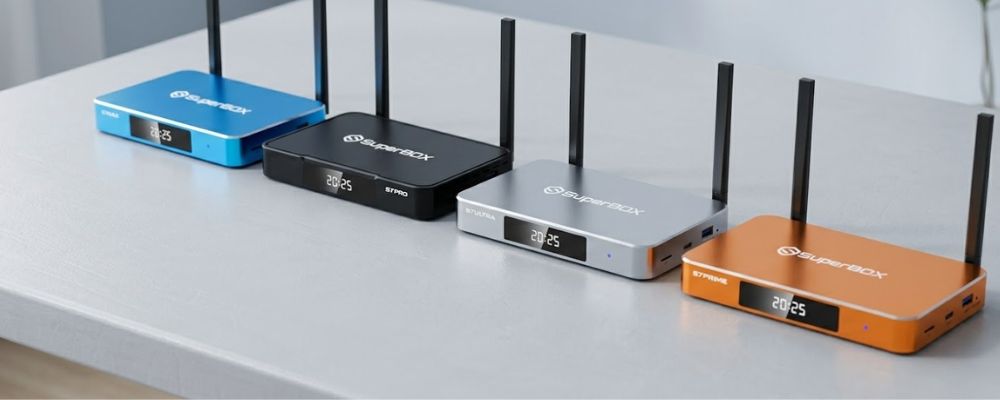
This pattern is common in categories dominated by platforms like Amazon. If anyone can sell it, no one can profit from it.
The Hidden Factor: Price Protection
This is the difference between short-term sales and long-term profit. Most retailers look for:
- Demand
- Features
- Price
But the smartest ones ask: “Can I still make money on this product in 3 months?”
What Price Protection Actually Does
Brands that implement reseller protection strategies help:
- Maintain pricing consistency
- Prevent aggressive undercutting
- Limit oversupply

This leads to:
- Stable margins
- Predictable revenue
- Less operational stress
Why It Changes Everything
Without protection → You compete on price
With protection → You compete on value
That’s what separates average products from truly profitable electronics to sell.
A Smarter Strategy Retailers Are Moving Toward
Retailers who consistently generate profit are shifting toward:
- Controlled-distribution products
- High perceived value categories
- Daily-use electronics
Premium streaming devices are a clear example of this shift. They combine:
- Strong demand
- Clear customer value
- Lower price transparency
- Reseller-friendly pricing structures
This is why they are becoming one of the most reliable profitable electronics to sell in 2026.
How to Choose Profitable Electronics to Sell (Decision Framework)
Before adding any product, run it through this filter:
- Can I maintain 30–50% margin long-term?
- Is this protected from price wars?
- Does it solve a daily need?
- Is it hard to compare online?
- Can I explain it in 30 seconds?
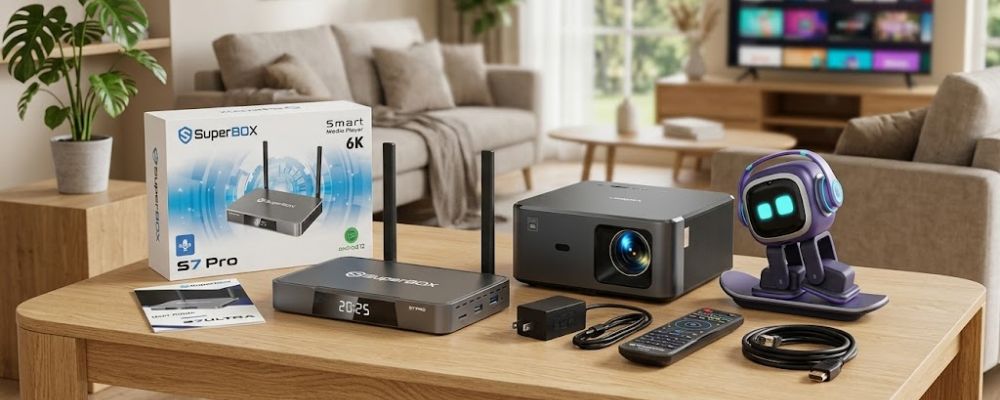
If you answer “no” to 2+ → rethink the product.
The Bottom Line
The best profitable electronics to sell aren’t just the ones that move fast — they’re the ones that keep generating profit without forcing you into price competition. In today’s retail environment, winning products share 4 traits:
- High perceived value
- Controlled competition
- Consistent demand
- Margin protection
Looking for a More Sustainable Profit Model?
If you’re searching for profitable electronics to sell, it may be time to stop chasing trends and start choosing products designed for retailer success like SuperBox premium streaming box. Some emerging categories, like premium streaming devices with structured reseller support, are helping stores move away from price wars and toward predictable, long-term profitability.
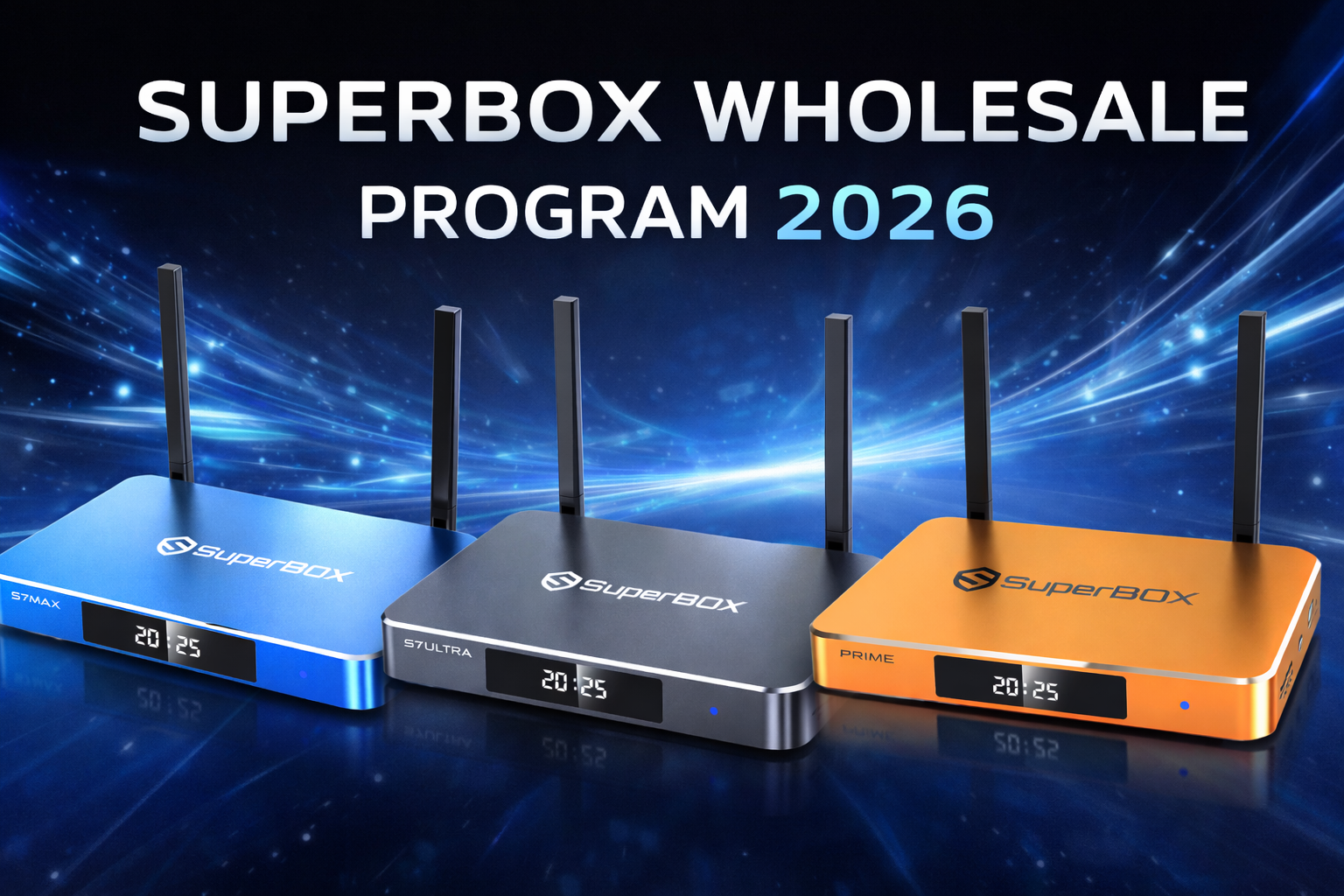
Whether you’re a retail customer looking for a better home entertainment solution or a reseller aiming to build a sustainable, high-margin business, this category is worth serious consideration. Fill out the contact form, and our team will reach out within 24 hours.
We’ll also share exclusive offers and tailored pricing options in the next step based on your needs and goals.