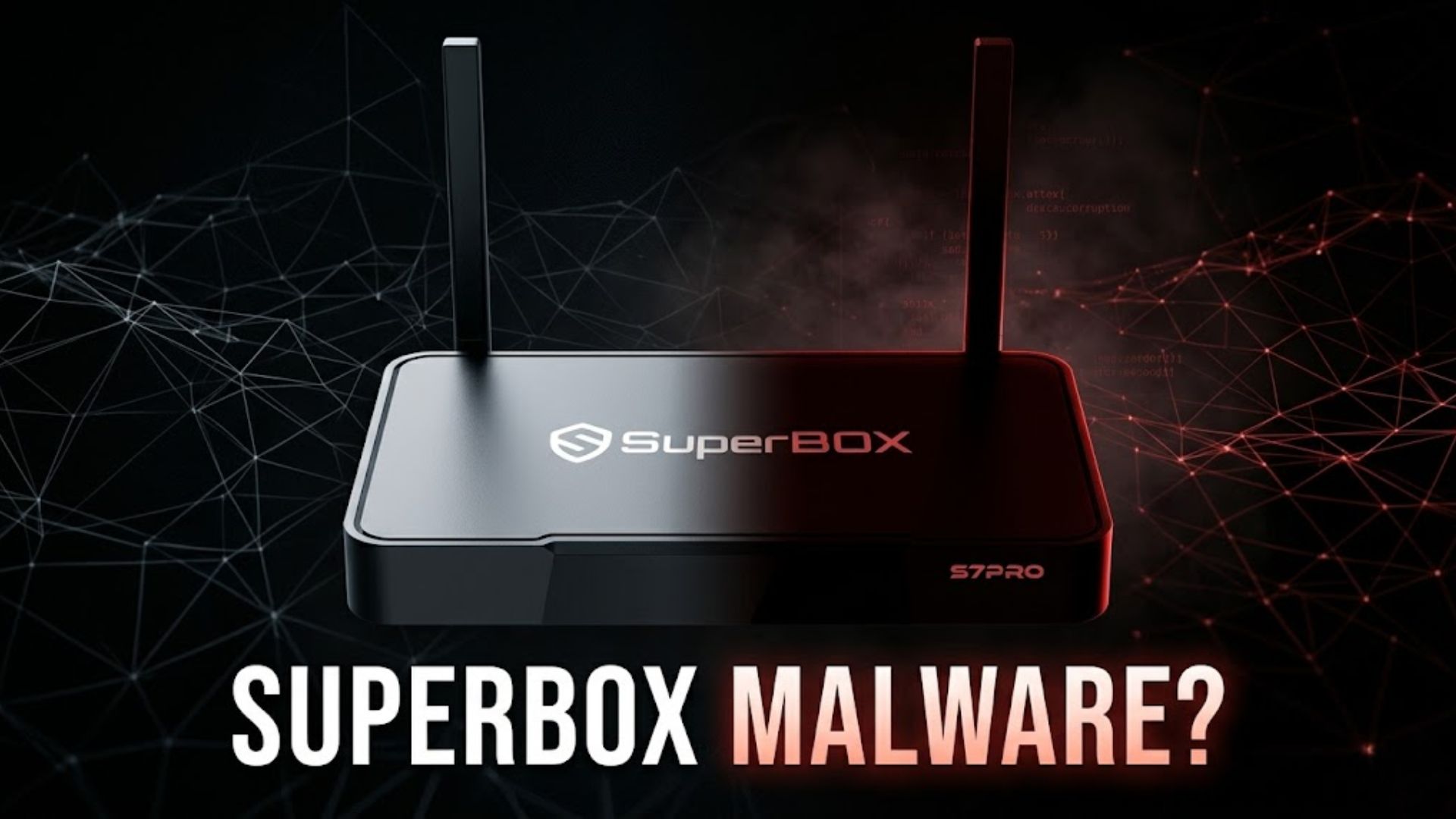
The “SuperBox malware” allegations are everywhere online. What isn’t everywhere? Evidence. If you’ve been researching SuperBox, chances are you’ve stumbled across alarming terms: botnet, data theft, security risk. It sounds serious. And if you’re a current or potential SuperBox customer, it’s understandable that those words would give you pause. But search the claims and you’ll find no named malware strain, no CVE, no published security report, no researcher willing to put their name on a confirmed finding. Just vague accusations recycled across forums with nothing verifiable underneath. Here’s what the evidence actually shows.
What Are the SuperBox Malware Claims, Exactly?
Before we can address the allegations, it’s worth pinning down what’s actually being claimed because the accusations tend to be frustratingly vague.
The most common versions you’ll see floating around look something like this:
- “SuperBox has malware on it.”
- “SuperBox devices are part of a botnet.”
- “SuperBox steals your personal data.”
- “These boxes are a security risk.”
Notice anything? None of these claims come with specifics. There’s no named malware strain, no CVE identifier, no cybersecurity firm that has published a report, no network forensics data, no ISP flagging traffic as a threat. Nothing that would hold up to even basic scrutiny.
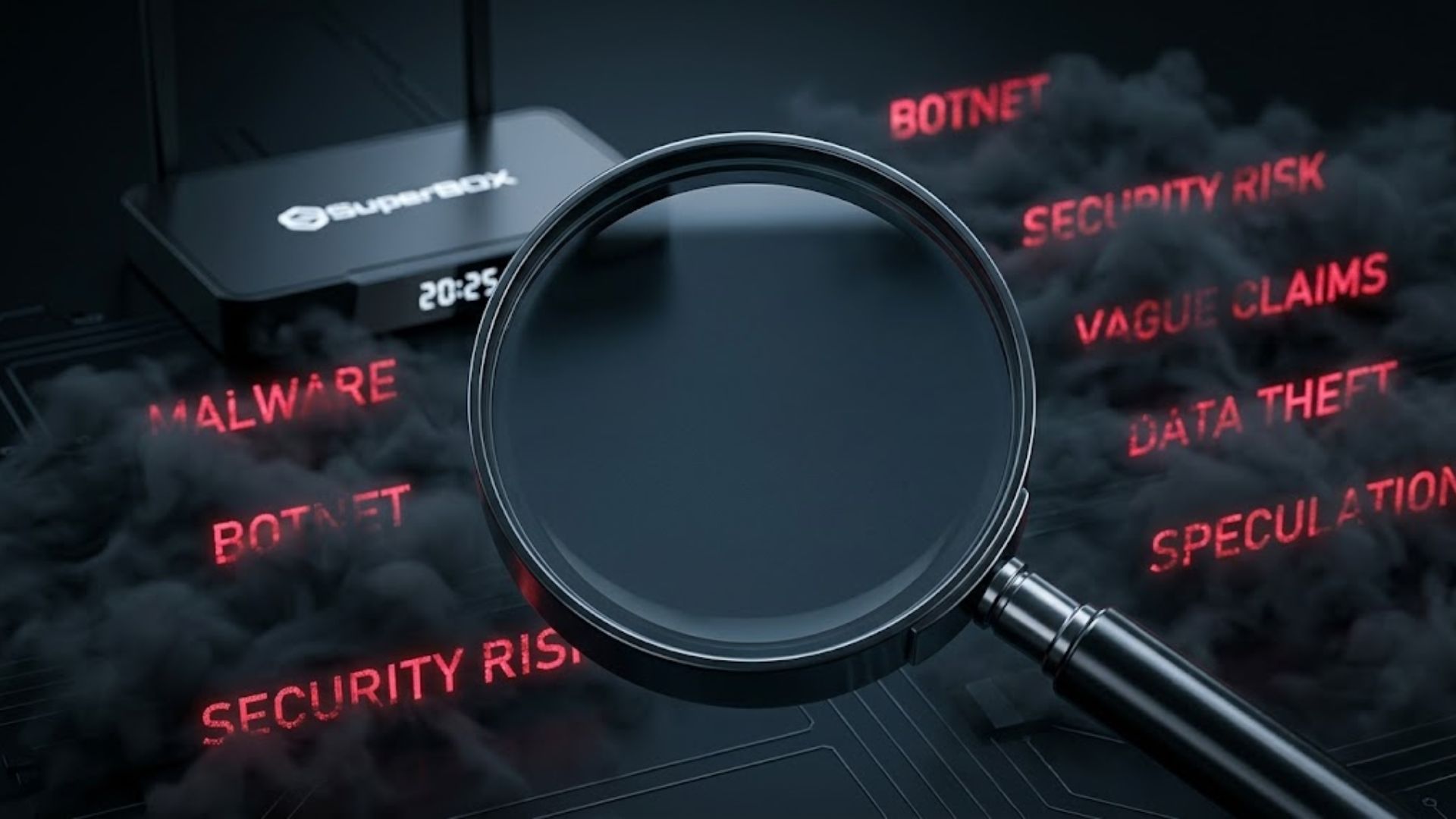
In the cybersecurity world, a serious allegation requires serious evidence. You’d expect at minimum a technical writeup, a packet capture showing suspicious outbound traffic, or some form of independent analysis. For SuperBox, none of that exists in the public record. What does exist is speculation, assumption, and in some cases, competitive misinformation.
That matters. Because when claims circulate without evidence, they have a way of feeling true even when they aren’t.
Does SuperBox Contain Malware? No — And Here’s Why That Matters
SuperBox is, at its core, a piece of consumer electronics, an Android-based TV box designed to stream content. It runs a customized version of Android, connects to your TV via HDMI, and does what it’s built to do: deliver entertainment to the people who bought it.
The business logic alone makes the malware claim implausible. SuperBox operates as a legitimate consumer electronics company with manufacturing facilities, warehouses, offices across multiple countries, and a real customer support team. Companies that build actual malware don’t set up physical infrastructure, employ support staff, and work to maintain long-term customer relationships. They don’t survive for years in a market where unhappy customers talk loudly and publicly.
The people making malware want to stay invisible. SuperBox is not trying to stay invisible. They’re actively advertising, shipping products, and answering support tickets.
If malware were genuinely embedded in SuperBox devices, you’d expect to see some form of technical evidence surface over time. Independent security researchers would find anomalous network traffic. ISPs would flag unusual behavior patterns from devices on their networks. Security tools would start identifying signatures. Cybersecurity journalists would investigate. None of that has happened — and SuperBox has been in customers’ hands for years.
The absence of evidence isn’t always meaningful, but in this case, given how many devices are in circulation and how long they’ve been in use, it’s telling.
Is SuperBox Running a Botnet?
Alongside the SuperBox malware allegations, the botnet claim is perhaps the most dramatic.
A botnet isn’t just a vague threat, it’s a technically specific thing. To run a botnet through consumer devices, you’d need persistent backdoor access, a command-and-control (C&C) infrastructure, and ongoing covert communication between the compromised devices and the botnet operator. This kind of activity leaves traces. It generates detectable network traffic. Cybersecurity companies monitor for exactly this kind of behavior at scale.

Here’s what would need to be true for the SuperBox botnet claim to hold:
- SuperBox devices would need to be sending unusual outbound traffic — detectable by any router with basic monitoring
- ISPs would need to be completely unaware of this activity across potentially millions of devices
- Security researchers who actively scan for botnet traffic would need to have missed it entirely
- This would need to have continued undetected for years
The more you think about it, the less it holds together. Anyone with basic networking knowledge can monitor outbound traffic from their router. SuperBox customers who’ve done this haven’t reported anything out of the ordinary. The claim simply doesn’t survive technical scrutiny.
SuperBox Is a Real Company and That Matters for Security
One of the quieter facts that gets lost in these conversations is that SuperBox isn’t some anonymous operation shipping boxes out of a garage. Let’s have a look at SuperBox facility: manufacturing plants and warehouses. Companies that exist to defraud customers through malware don’t build factories and hire support teams. They stay small, anonymous, and ready to disappear when someone looks too closely. SuperBox has done the opposite.
Does SuperBox Steal Your Personal Information? Let’s Compare the Numbers
This is where the conversation gets genuinely interesting because the “privacy risk” framing around SuperBox falls apart the moment you compare it to the mainstream streaming services most people already use without a second thought.
- SuperBox requires no account login. There’s no username, no password, no profile to create. The device doesn’t know who you are.
- SuperBox stores no payment information on the device. Purchases happen at checkout, not through the box itself. Your credit card details aren’t sitting inside the hardware on your shelf.
- SuperBox doesn’t run targeted advertising. It doesn’t track what you watch in order to serve you ads based on your viewing habits.
The only data collected by SuperBox is tied to your device’s MAC address (the unique hardware identifier assigned to the unit). Like any modern connected device, SuperBox does communicate with its servers (where its development and IT teams are located) for legitimate operational purposes: activating your device, checking for errors, pushing updates, and providing support when you need it. That’s standard practice across the industry.
Now compare that to the services most people consider perfectly safe:
Criteria | SuperBox | Streaming Services |
Requires personal account login | No | Yes |
Stores payment information | No | Yes |
Runs targeted advertising | No | Yes |
Tracks viewing behavior | Minimal | Extensively |
Builds preference profiles | No | Yes |
Shares data with ad partners | No | Yes |
Has experienced data breaches | No documented cases | Yes (multiple platforms) |
Mainstream streaming services are built around data collection. Their recommendation engines, their advertising models, their entire business infrastructure depends on knowing what you watch, when you watch it, how long you watch it, and what that says about your preferences and purchasing behavior. That data is stored, analyzed, and in many cases shared with third-party advertising partners.
SuperBox doesn’t do any of that. The irony is that the device being called a privacy risk is, by most objective measures, significantly less invasive than the services being held up as the safe alternative.
If You’re Still Cautious — Here’s How to Use SuperBox With Complete Peace of Mind
Even if you accept that the malware and botnet claims lack evidence, there’s nothing wrong with wanting an extra layer of confidence. And the good news is that adding that layer is straightforward.
Put SuperBox on a guest network
Most modern routers allow you to create a separate guest network, a segregated zone that keeps devices isolated from your main network. Running SuperBox (or any smart TV device, for that matter) on a guest network means that even in a theoretical worst-case scenario, it can’t interact with your computers, phones, or other connected devices. This is a sensible practice for any device you didn’t build yourself.
Use a VPN
Connecting SuperBox through a VPN encrypts all outbound traffic and masks your IP address. If your concern is about what data the device might be sending, a VPN makes that a moot point. Many routers support VPN configuration at the router level, so you don’t even need to install anything on the box itself. Check out the best VPN for SuperBox.
Check the traffic yourself
If you’re technically inclined, your router’s admin panel almost certainly has the ability to log or display traffic from individual connected devices. SuperBox customers who’ve done this haven’t reported anything unusual. The option is there if you want to verify firsthand.
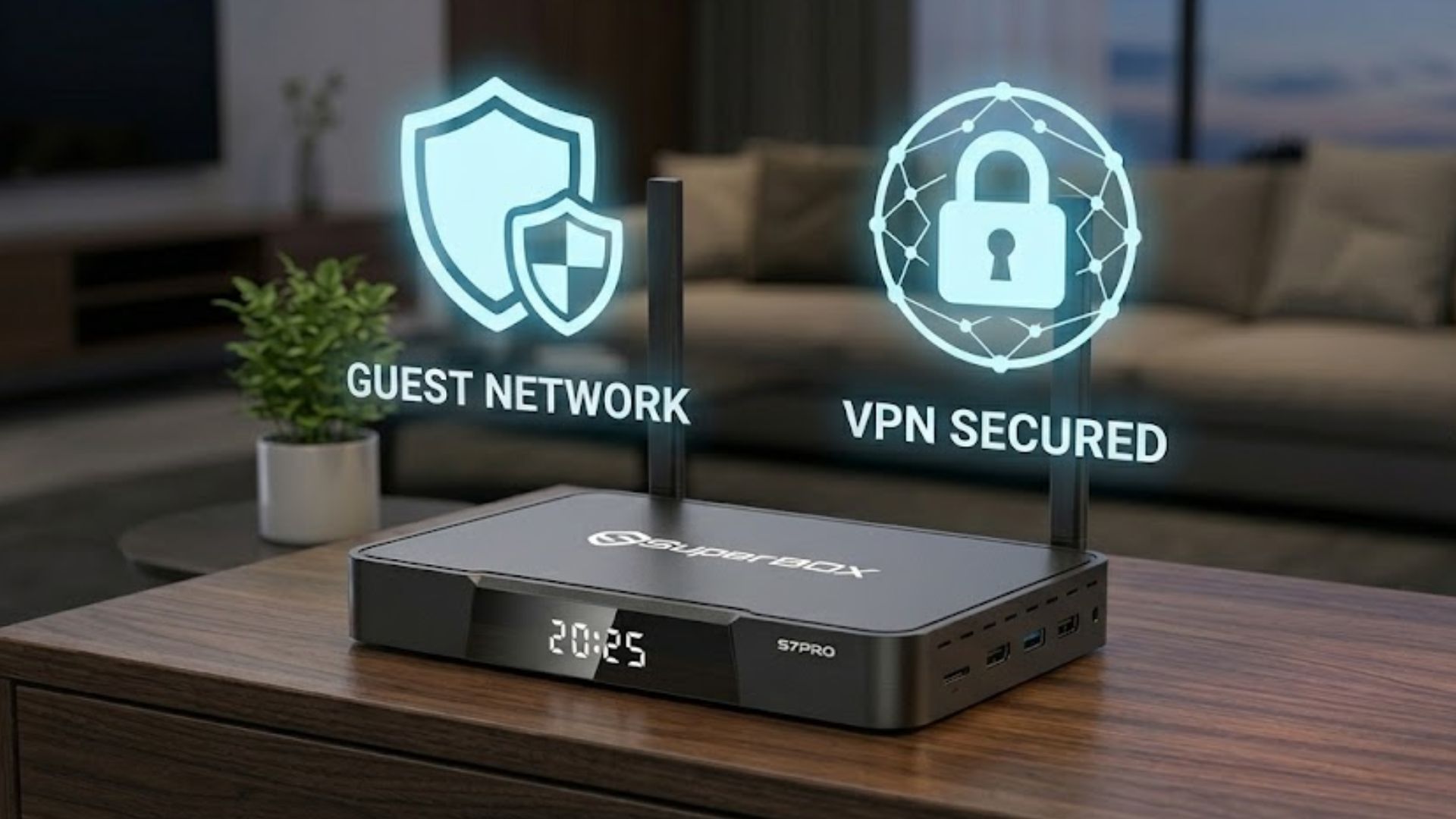
It’s worth noting that these practices are recommended for all smart home devices, not just SuperBox. Smart TVs, streaming sticks, and even smart speakers all benefit from the same level of attention. The fact that we’re discussing them in the context of SuperBox, but not other streaming devices, reflects how unevenly these concerns get applied.
The Double Standard in “Is SuperBox Safe?” Conversations
There’s a pattern worth naming directly: the scrutiny applied to SuperBox is rarely applied to the alternatives. Some of the most popular streaming platforms out there collect detailed viewing data and serve targeted ads. Others have had documented security vulnerabilities. Some have even experienced credential stuffing attacks that directly compromised user accounts. These are real, reported, factual events — yet these platforms are treated as the baseline definition of “safe.”
None of that means you shouldn’t ask questions about security. You absolutely should — about every device on your network. But you should ask the same questions of everything, and hold every answer to the same standard of evidence.
When you do that with SuperBox, the malware claims don’t survive.
SuperBox Malware: The Bottom Line
The allegations that SuperBox contains malware, operates as part of a botnet, or steals user data are not supported by evidence. There are no technical reports, no confirmed incidents, no independent security findings, and no regulatory actions that back up these claims. What exists instead are vague, generalized warnings that have been repeated until they feel authoritative — which is not the same thing as being true.
SuperBox is a consumer electronics product built by a legitimate company with real infrastructure and a real customer base. It collects less personal data than virtually any mainstream streaming service. It has been in use for years without documented security incidents — and the SuperBox malware findings that critics keep implying exist simply never materialized. It has been in use for years without documented security incidents. Customers who’ve been using the same box since day one are still using it comfortably today.

If you want to take extra precautions, a guest network and a VPN are easy to set up and give you complete visibility and control over what your device is doing. But the precaution isn’t because SuperBox gives you reason to worry, it’s because those are smart practices for any connected device in your home.
You can use SuperBox with confidence.
Frequently Asked Questions
Below are some frequently asked questions (FAQs) about SuperBox risks and our statement.
Is SuperBox malware or a virus?
No. SuperBox is a standard Android TV box. There are no documented cases of SuperBox devices containing viruses or malicious software.
Does SuperBox spy on you?
No. SuperBox requires no account login and collects no behavioral or personal data. The only information tied to your device is your MAC address, used solely for customer service.
Has SuperBox ever been confirmed as running a botnet?
No. There are no reports from ISPs, cybersecurity researchers, or regulatory agencies confirming this allegation.
What data does SuperBox collect?
SuperBox collects MAC address data associated with your device for customer service and activation purposes only. No behavioral data, viewing history, or personal information is collected. Check SuperBox privacy policy.
Is SuperBox safe to use on my home network?
Yes. If you’d like added peace of mind, you can run it on a guest network or route traffic through a VPN — both of which are good general practices for any smart device.
How long have people been using SuperBox?
Many customers have been using SuperBox for five years or more without any security incidents.
If you’re ready to experience it for yourself, start with the best-selling SuperBox S7 Max.
Have questions about your SuperBox? Contact our support team — we’re happy to help.